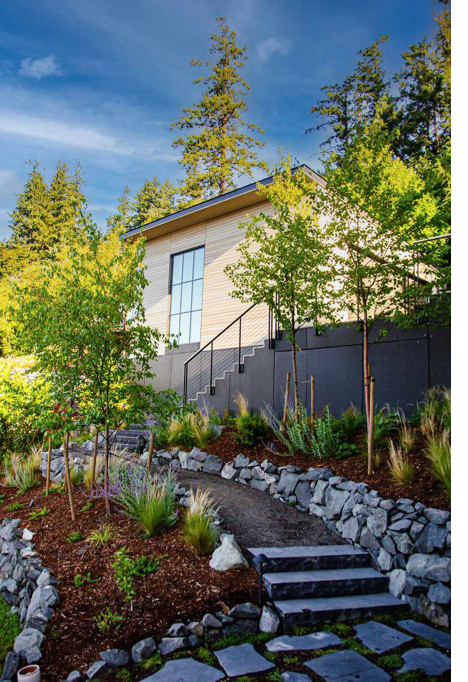
If you're planning garden or groundworks at your property and someone has mentioned a retaining wall, you may be wondering how that differs from a normal garden wall — and why the difference matters.
This guide explains everything in plain English, helping homeowners understand retaining walls in Cornwall, when they're needed, and how they differ from standard walls.
What Is a Normal Garden Wall?
A garden wall (sometimes called a boundary wall) is mainly decorative or functional for separation.
Typical uses include:
- Defining boundaries
- Supporting fencing
- Creating privacy
- Enhancing landscaping
These walls:
- Sit on level ground
- Do not hold back soil
- Are usually built from brick, block, stone, or timber
If a wall isn't retaining earth, it's classed as a normal garden wall, not a structural retaining wall.
What Is a Retaining Wall?
A retaining wall is designed to hold back soil where ground levels change.
You may need a retaining wall if:
- You have a sloping garden that you want to level out
- You are creating a basement or sunken patio
- You need to prevent soil erosion or landslides
- You are creating terraced planting areas
Retaining Walls vs Normal Walls – The Key Difference
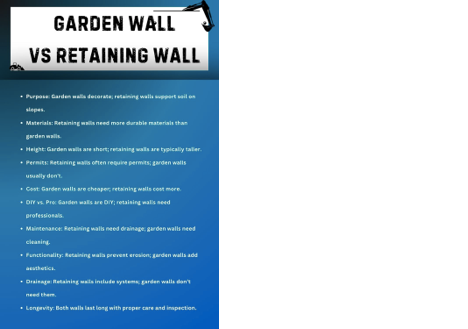
The main difference is pressure.
A normal wall supports itself only.
A retaining wall supports:
- The weight of soil
- Water pressure after rainfall
- Long-term ground movement
This is why retaining wall construction requires:
- Strong foundations
- Proper drainage
- Correct materials
- Skilled installation
Why Drainage Is Critical for Retaining Walls
Poor drainage is the most common cause of retaining wall failure.
When water builds up behind a wall:
- Pressure increases
- Walls begin to crack or lean
- Failure can occur suddenly after heavy rain
A properly built retaining wall should include:
- Free-draining backfill
- Land drains behind the wall
- Filter membranes to prevent blockage
- Controlled water outlets
Retaining Walls in Sloping Gardens
Many homeowners in Cornwall need retaining walls because of sloping gardens.
A correctly designed concrete retaining wall can:
- Create usable flat garden areas
- Improve safety and access
- Prevent erosion
- Increase property value
This is especially important when building a retaining wall on a steep slope, where poor design can quickly lead to failure.
Can Retaining Walls Look Good?
Yes — retaining walls can be both practical and attractive.
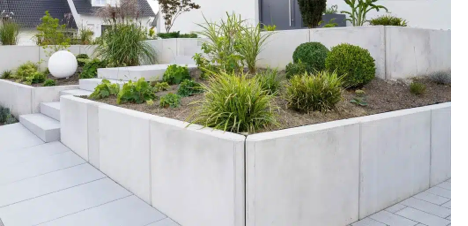
Depending on design and materials, they can:
- Match existing landscaping
- Incorporate steps or seating
Common Homeowner Mistakes
Some of the most common mistakes include:
- Building a garden wall where a retaining wall is required
- Ignoring drainage
- Underestimating soil pressure
- Assuming DIY is suitable for structural walls
These issues often lead to costly repairs later.
Do Retaining Walls Need Planning Permission in Cornwall?
Sometimes.
You may need approval if:
- The wall exceeds certain heights
- It's close to a boundary or highway
- It affects neighbouring land
Even when planning permission isn't required, Building Control or a structural engineer may still be needed for compliance and safety.
Which Type of Wall Do You Need?
Ask yourself one simple question:
👉 Is the wall holding back soil?
- No → You likely need a normal garden wall
- Yes → You need a retaining wall
If you're unsure, it's always better to seek advice before construction begins.