Retaining walls are rarely just "walls". They are structural solutions that unlock unusable land, stabilise slopes, protect buildings, and make complex sites viable for development. When done properly, they are quiet pieces of engineering excellence—often unseen, but absolutely critical.
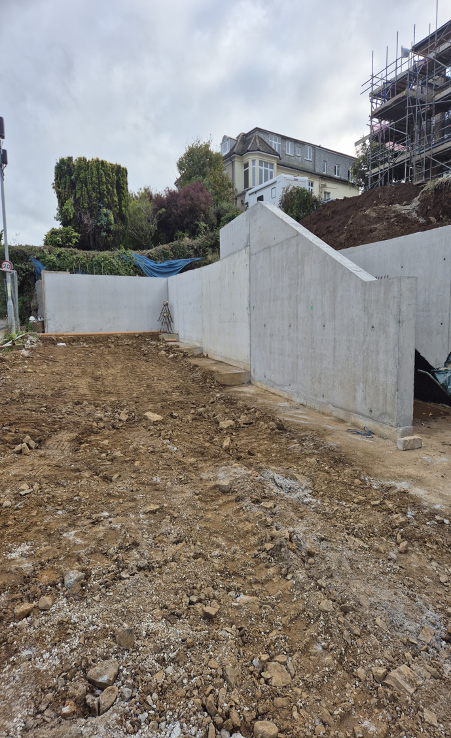
For specialist contractors like Cornwall Civils and Construction Ltd, retaining walls sit at the intersection of engineering precision, buildability, and real-world site constraints. This is where experience matters most.
Why Retaining Walls Matter More Than Ever
Across Cornwall and the wider UK, developable land is increasingly constrained. Sloping plots, tight boundaries, coastal ground conditions, and proximity to existing structures all demand retaining solutions that are:
- Structurally robust
- Engineer-approved
- Buildable in confined conditions
- Durable for decades, not years
A retaining wall isn't simply about holding soil back—it's about creating certainty for architects, engineers, developers, and homeowners.
Tight Access Sites: Where Theory Meets Reality
On paper, retaining walls often look straightforward. On site, they rarely are.
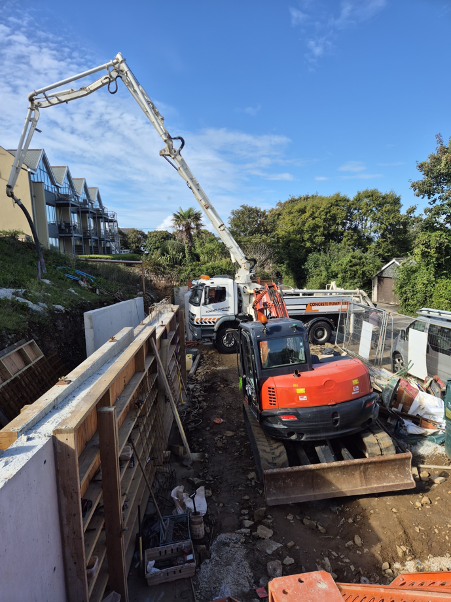
Tight access is one of the biggest challenges faced in modern construction. Many retaining wall projects involve:
- Restricted plant access
- Narrow terraces or stepped plots
- Existing buildings hard up against boundaries
- Limited working room for shutters, steel, and pours
In these scenarios, experience-led planning becomes as important as structural design. Pour sizes, sequencing, temporary works, and even how materials arrive on site must be thought through long before concrete is ordered.
This is where seasoned groundworks contractors separate themselves from general builders.
Bespoke Timber Formwork: Crafted, Not Generic
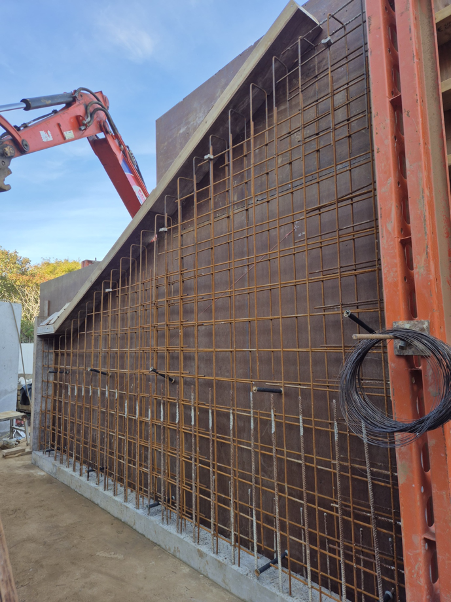
Standard formwork systems have their place—but many retaining walls demand bespoke timber shuttering.
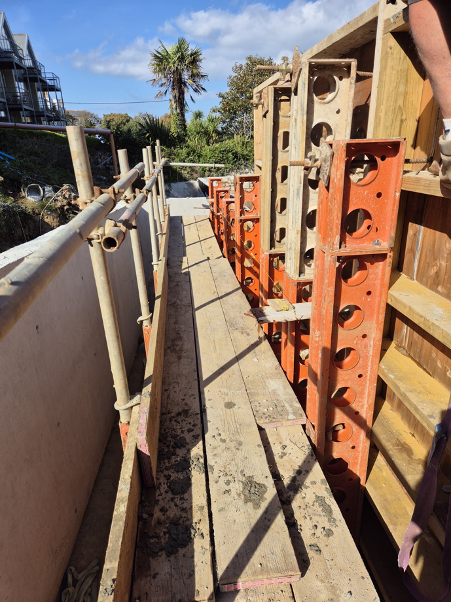
Why? Because no two sites are truly the same.
Bespoke timber formwork allows for:
- Curved or stepped retaining walls
- Variable wall thicknesses
- Integration with RC steps and landings
- Single-sided shuttering where excavation is restricted
- Precision alignment with architectural finishes
Traditional timber formwork, built by skilled hands, provides flexibility that modular systems often cannot. When combined with strongbacks, slim RMDs, push-pulls, and carefully designed temporary works, it enables safe, accurate pours even in the most confined environments.
This craftsmanship is becoming a lost art—but on complex retaining wall projects, it remains invaluable.
Drainage: The Silent Partner of Every Retaining Wall
One of the most common causes of retaining wall failure isn't structural—it's poor drainage.
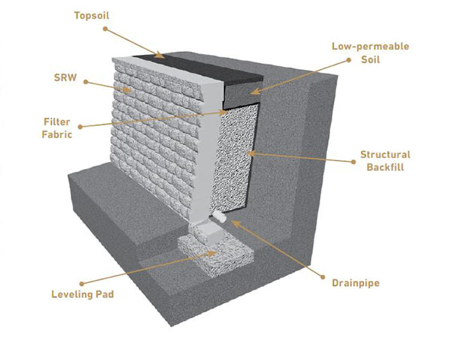
A properly designed retaining wall must manage water through:
- Land drains
- Weep holes (where appropriate)
- Backfill selection
- Geotextiles and attenuation strategies
Without controlled water relief, hydrostatic pressure builds up—and no amount of concrete alone will compensate for that over time.
Retaining Walls as Part of a Bigger Picture
The most successful retaining wall projects are not treated as standalone elements. They are integrated into a wider scope that may include:
- RC steps and access routes
- Foundations and substructures
- Boundary walls and terraces
- Drainage and attenuation systems
- Architectural finishes
This holistic approach reduces interfaces, programme risk, and design clashes—something developers and architects increasingly value.
Standards That Govern Retaining Wall Design
The design and construction of a retaining wall is defined by a series of interconnected British and European Standards. These standards ensure that your retaining wall is built to a design that is stable and safe and the materials used have been tested and are of a specification that are of standard manufacturing quality.
BS 8002 and Eurocode 7 (EN 1997) – Geotechnical design and stability of earth-retaining structures.
BS 8500 and EN 206 – Concrete specification and durability performance for the intended working life.
EN 13369 – General rules for precast concrete products, covering manufacturing quality and testing.
Eurocode 2 (EN 1992-1-1) – Design of concrete structures, including reinforcement and detailing.
Experience Is the Real Specification
Anyone can build a wall. Not everyone can build a retaining wall on a tight, sloping site, next to existing structures, under programme pressure, and to engineer-approved tolerances.
That level of delivery comes from:
- Decades of hands-on groundworks experience
- Deep understanding of temporary works and sequencing
- Respect for traditional skills like bespoke timber formwork
- Modern execution using reinforced concrete best practice
In retaining walls, there are no shortcuts—only outcomes.
Final Thought
A retaining wall should do more than retain ground.
It should create confidence, unlock land, and stand
the test of time.
When designed intelligently and built by specialists, retaining walls don't just support soil—they support entire projects.